

Dental Myths and Reality
Dental Myths and Reality: Dental laboratory practice is the heart of the modern dental industry. It plays a vital and inseparable role in contemporary dentistry and is essential for restoring people’s smiles.
Despite its great importance, this field is often surrounded by myths and misconceptions. They create false impressions and unnecessary fears regarding the work of dental technicians. In this article, we will examine the most common misunderstandings about dental laboratory practice and compare them with the facts.
Can digital technologies change traditional perceptions? Through knowledge and awareness, we can bring greater clarity and understanding to this key area of healthcare. Our goal is to dispel misconceptions and present the real picture of the processes carried out in dental laboratories.
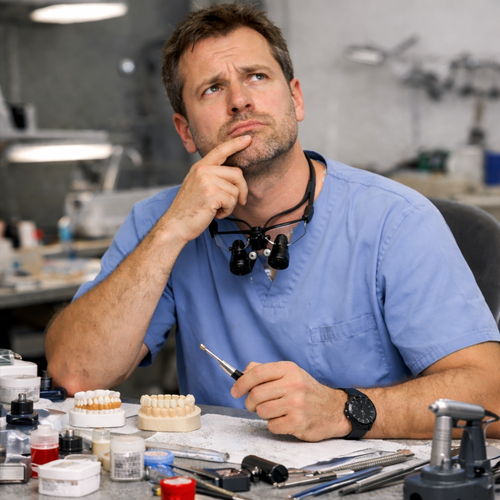
Most Common Dental Myths and Reality
Let us take a closer look at some of the most frequent myths and the reality in the world of dental technology.
Dental technicians are “tooth craftsmen.”
Beyond creating crowns, bridges, and dentures, the work of dental technicians goes far beyond simply “making teeth.” They possess in-depth knowledge of dental materials, oral anatomy, and emerging technologies to create functional and aesthetically refined dental solutions.
New technologies eliminate the need for qualified dental technicians.
Although modern dental technologies significantly improve precision and efficiency, the experience and intuition of qualified dental technicians remain irreplaceable. Tools facilitate the process, but human judgment and expertise ensure the right decisions tailored to each patient’s individual needs.
Dental technicians do not need specialized education.
Dental technicians undergo specialized and accredited training in dental materials, laboratory techniques, and computer-aided design (CAD). To stay up to date with innovations, they regularly participate in continuing education, professional conferences, and industry events.
Digital impressions are less accurate than traditional methods.
Digital impressions have evolved significantly and offer accuracy comparable to, and in some cases even higher than, traditional techniques. They reduce errors caused by material deformation and accelerate the overall treatment process.
Nevertheless, traditional analog impressions continue to be widely used and often remain a reliable solution. The choice depends on the specifics of the case, the preferences of the dentist and laboratory, as well as the patient’s needs.
Dental technicians work in isolation.
Dental technicians often work in close collaboration with dentists and orthodontists. Effective communication is key to successful restorations that meet the individual needs of patients.
Conclusion
In conclusion, despite common misconceptions, dental technicians play a decisive role in providing high-quality and personalized solutions for every patient. Technology supports their work but cannot replace the professional experience, creative intuition, and expert knowledge required to create functional and aesthetic dental restorations.
In this context, digital solutions such as AMOSYS optimize administrative tasks – order tracking and process management. This reduces time spent on documentation and allows focus on what truly matters: precise and high-quality dental products.
Debunk the myths with practical strategies
Download the free eBook “Strategies for Success: A Guide for Dental Laboratories” and see AMOSYS in action.