
The Digital Protocol in Modern Dentistry – The Boundary Between Technology and Human Craftsmanship
Modern dental workflow is increasingly digital, but the truly professional result is created where technological precision meets human interpretation, morphological knowledge, and aesthetic sensitivity.
What the Digital Protocol in Dentistry Represents
In recent years, digitalization has significantly changed how many processes are performed in dental medicine and dental technology. One of the most discussed questions in the professional community is whether a fully digital workflow is truly possible and where traditional techniques and human interpretation remain essential.
This discussion becomes even more relevant with the growing presence of artificial intelligence in different stages of the dental workflow.
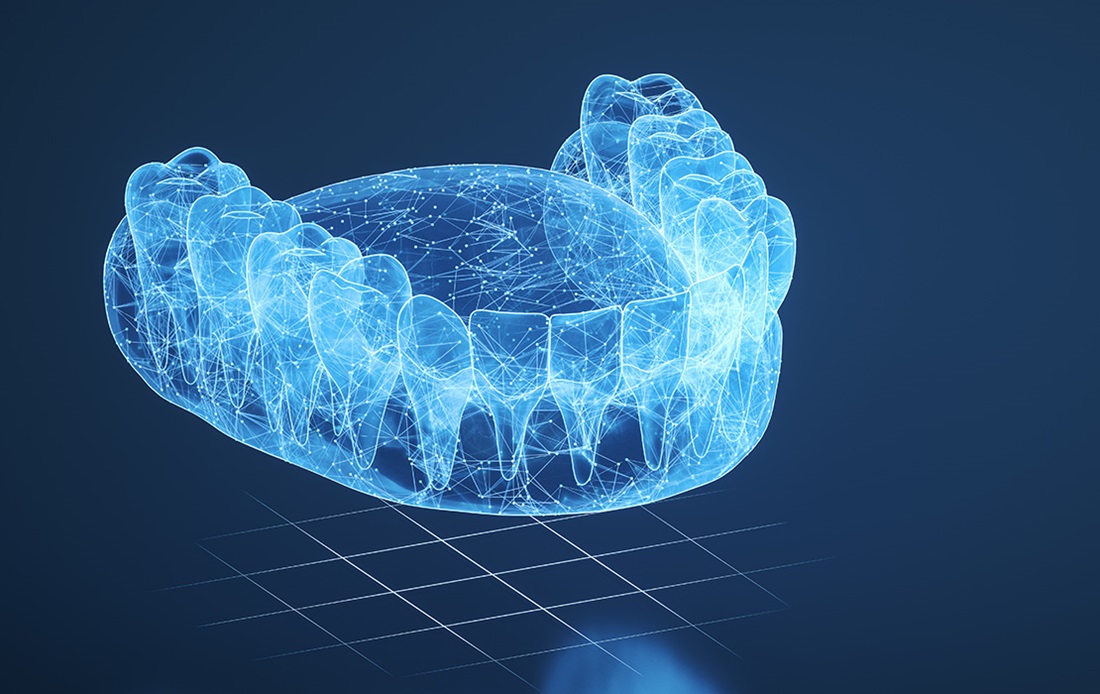
The digital protocol in dentistry usually begins with an intraoral scanner that captures a digital impression of the teeth. Instead of traditional impression materials, a three-dimensional file is created that contains an accurate digital representation of dental structures.
This file is then used in CAD (Computer-Aided Design) software where the restoration is designed – such as a crown, bridge, or implant-supported restoration. After the design is completed, the information is sent to a CAM (Computer-Aided Manufacturing) system which produces the restoration through milling or 3D printing. The final stage is the clinical placement of the finished restoration.
This process is known as CAD/CAM dentistry and allows the entire cycle – from impression to final crown – to take place in a fully digital environment.
Main Advantages of the Digital Workflow
Recent scientific research demonstrates multiple advantages of digital workflows. In many cases they are faster and more comfortable for the patient because traditional impression materials are no longer required.
- Faster communication between clinic and laboratory
- Greater patient comfort during impression taking
- Shorter production and delivery times
- Predictable and repeatable workflow
- High precision when systems are used correctly
Limitations and Professional Challenges
Despite its advantages, the digital protocol also has limitations. Investment in equipment and software can be substantial, which may represent a barrier for many laboratories and clinics. Additionally, there is a learning curve associated with adopting new technologies.
Another challenge is the lack of standardization between different software systems and file formats. For this reason many laboratories operate with a hybrid workflow that combines digital and traditional techniques.
Artificial Intelligence and the Risk of Standardized Morphology
Artificial intelligence is increasingly being integrated into dental medicine. It is used in diagnostics, implant planning, image analysis, and processes such as digital smile design.
Some CAD systems already include algorithms capable of automatically generating crown morphology based on the patient’s scan and occlusion.
However, this also raises an important concern among dental technicians. Automatically generated restorations may begin to look standardized. Some specialists refer to this as “AI teeth” – technically correct crowns that look visually similar because they are generated using the same algorithmic model.
“Scan is data. The technician is interpretation.”
Scanning provides precise data, but data alone does not define final aesthetics or function. Interpretation by a skilled technician who understands anatomy and dental morphology remains essential.
Why the Hybrid Approach Remains the Strongest
Most experts today agree that the best results come from a hybrid approach combining digital precision with human expertise and artistic interpretation.
In this model digital technologies collect accurate data and optimize production while technicians retain control over final morphology and aesthetics.
Ultimately the future of dentistry will likely not be fully digital or fully analog. Instead it will be an intelligent integration of technology and human craftsmanship – where digital systems provide efficiency and accuracy, while dental technicians remain the key factor that gives individuality and life to each restoration.