
3D Printing in Dentistry: From Prototypes to Final Products
The integration of 3D printing in dentistry is the technology that is changing the rules of the modern practice. Until recently, it was mainly used for working models, orthodontic appliances, and surgical guides, but today the focus has definitively shifted. Digital processes no longer just support the work – they complete it, offering unmatched precision, aesthetics, and speed for final products.
The technological leap in the field of dental technology is developing at an exponential rate. The introduction of innovative materials and advanced CAD/CAM software allows specialists to bypass traditional, cumbersome analog methods. Today, dental practitioners can offer their patients significantly faster, more accurate, and extremely durable clinical solutions.
3D Printing Materials: Nano-ceramics in Liquid Form
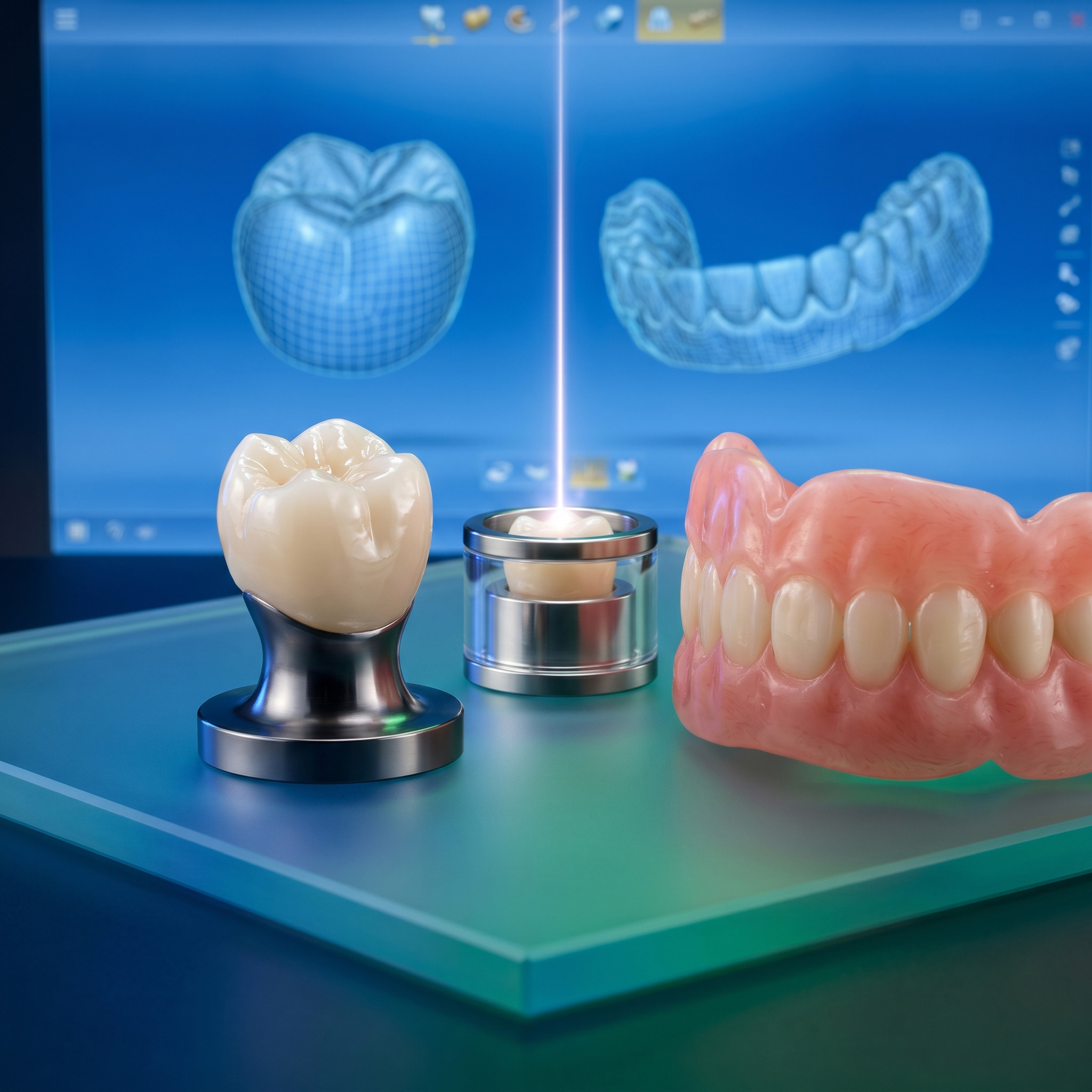
One of the most revolutionary steps is the shift in additive manufacturing technologies. High-strength, ceramic-reinforced resins (hybrid composites) are triumphing on the market, allowing direct 3D printing of permanent crowns, inlays, onlays, and even veneers.
These modern materials not only meet but often exceed the strict requirements for flexural strength and wear resistance (abrasion). In addition to their exceptional durability, they offer excellent translucency and the possibility of precise individual characterization with glazes, satisfying even the highest aesthetic requirements.
Why is this 3D printing a turning point for the practice?
Hybrid resins combine the biocompatibility and beauty of traditional ceramics with the flexibility of modern technologies. The patient can receive their permanent, high-quality restoration in a single visit (Chairside dentistry), eliminating the need for temporary constructions and repeat visits.
Digital Dentures via 3D Printing: Absolute Comfort
Another area where the digital revolution is changing the rules of the game is removable prosthodontics. The design and manufacturing of full and partial acrylic dentures is now being massively digitized. The process begins with an intraoral scan, which saves the patient the discomfort of traditional impression materials, and ends with precise milling or printing.
This fully digital protocol brings key advantages:
Zero Shrinkage
Unlike classical polymerization (boiling) of acrylics, machine manufacturing eliminates polymerization shrinkage. This guarantees a 100% accurate fit.
Reduced Number of Visits
Multiple clinical steps for adjustments and try-ins are saved. The process is optimized for both the doctor and the patient.
Perfect Duplication
If a patient breaks or loses their denture, it can be reproduced with a single click, as the digital file is stored forever in the archive.
Workflow Optimization and ROI
For dental laboratories and clinics, this transformation means much more than just “new technologies”. It involves drastically reducing production time, minimizing the risk of human error at every step, and seriously optimizing material costs. Dental technicians can now work in a cleaner environment, focusing on digital design and fine artistic finishing.